United Nations Association Rockies
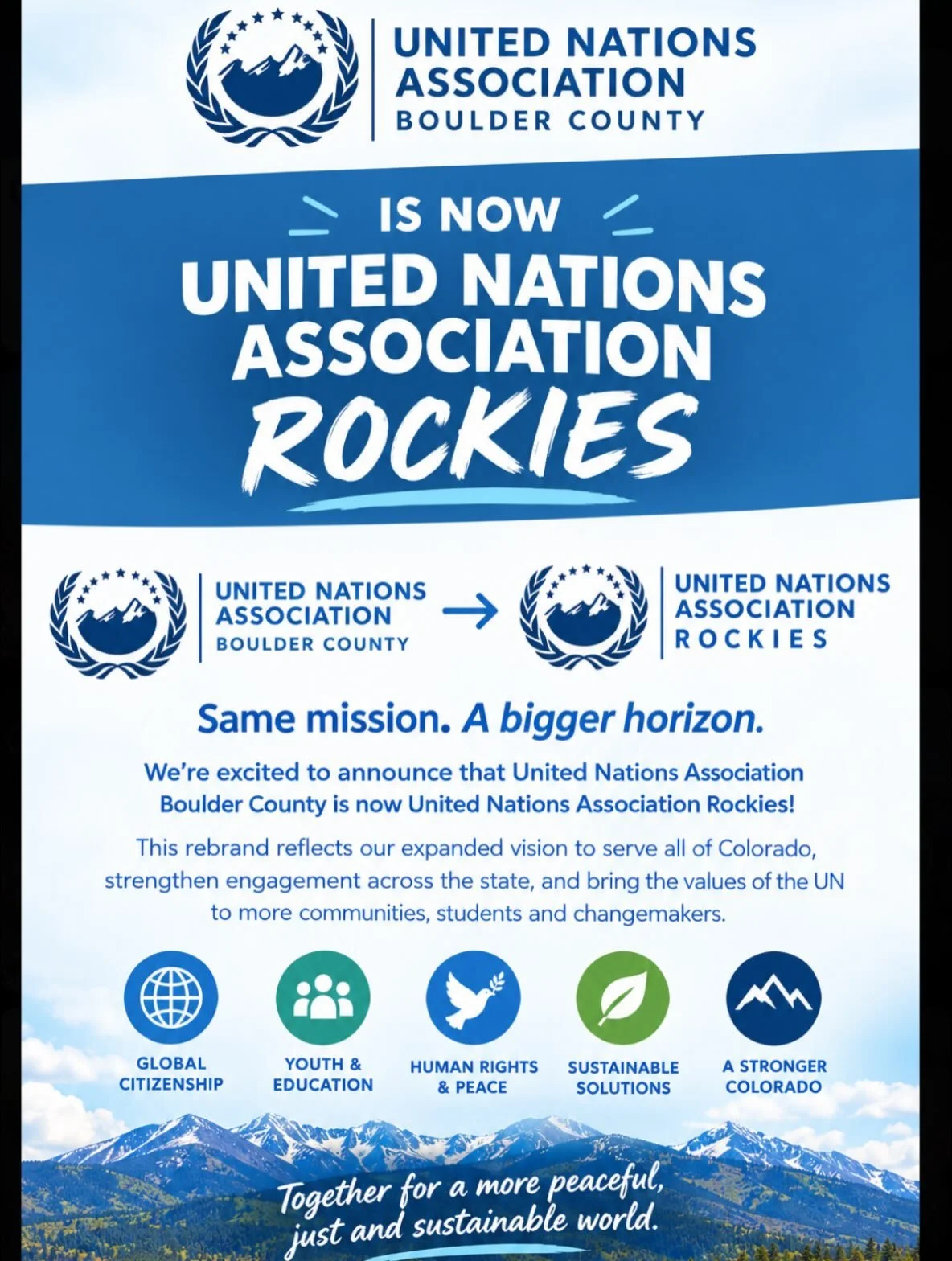
(Formerly UNA Boulder County)
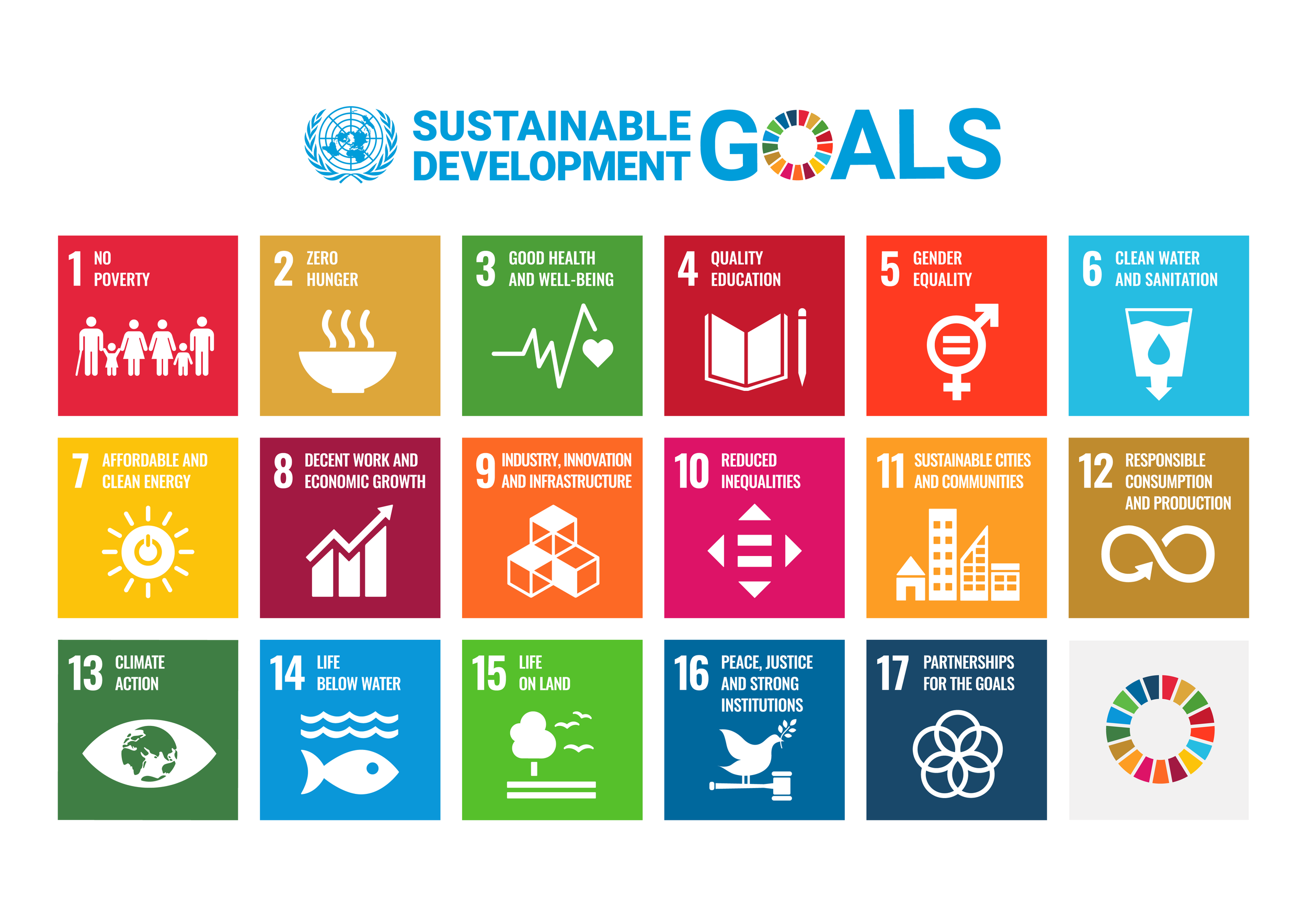
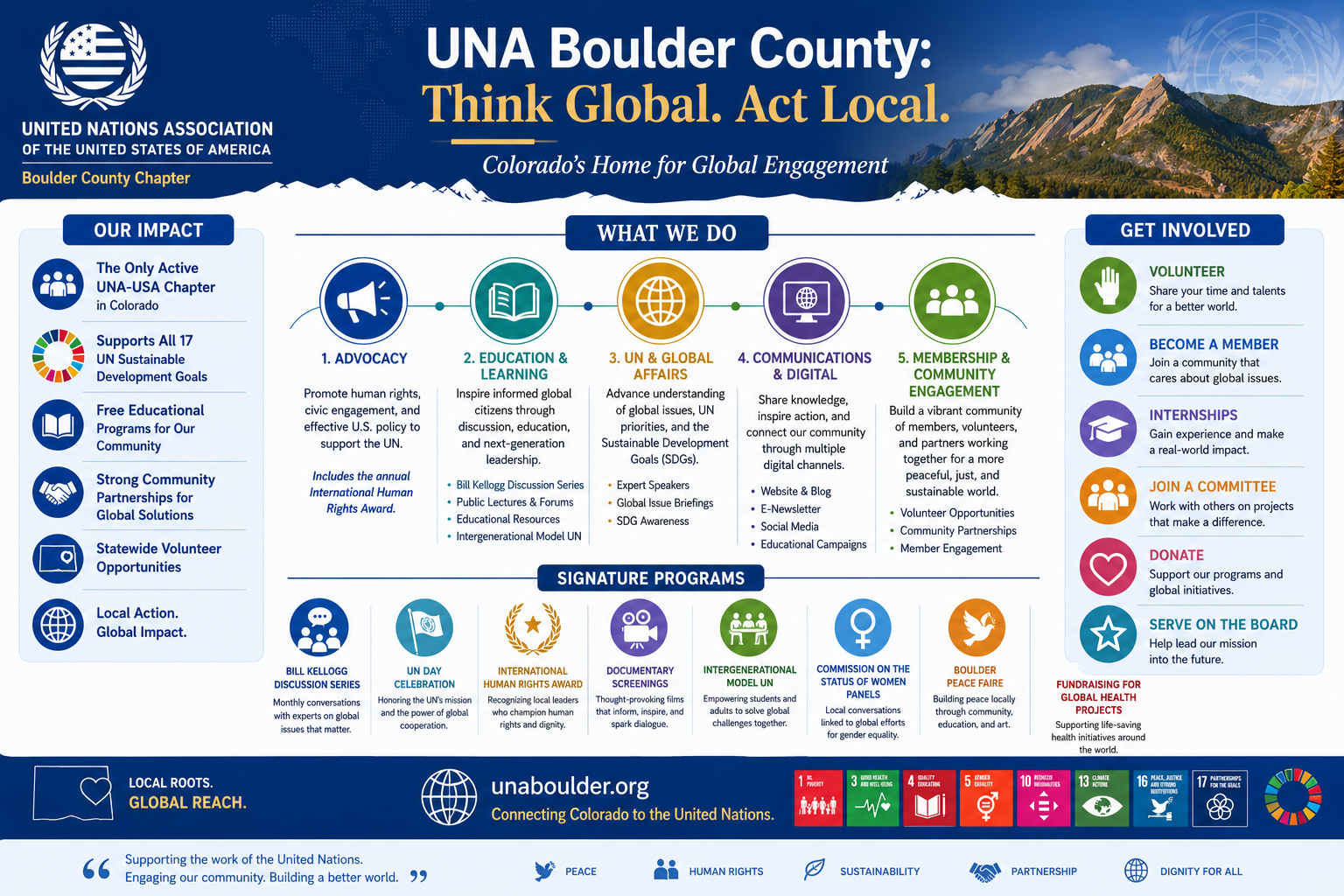
Founded in 1964 to support the mission of the United Nations and the 17 Sustainable Development Goals, we are Colorado’s UNA Rockies.
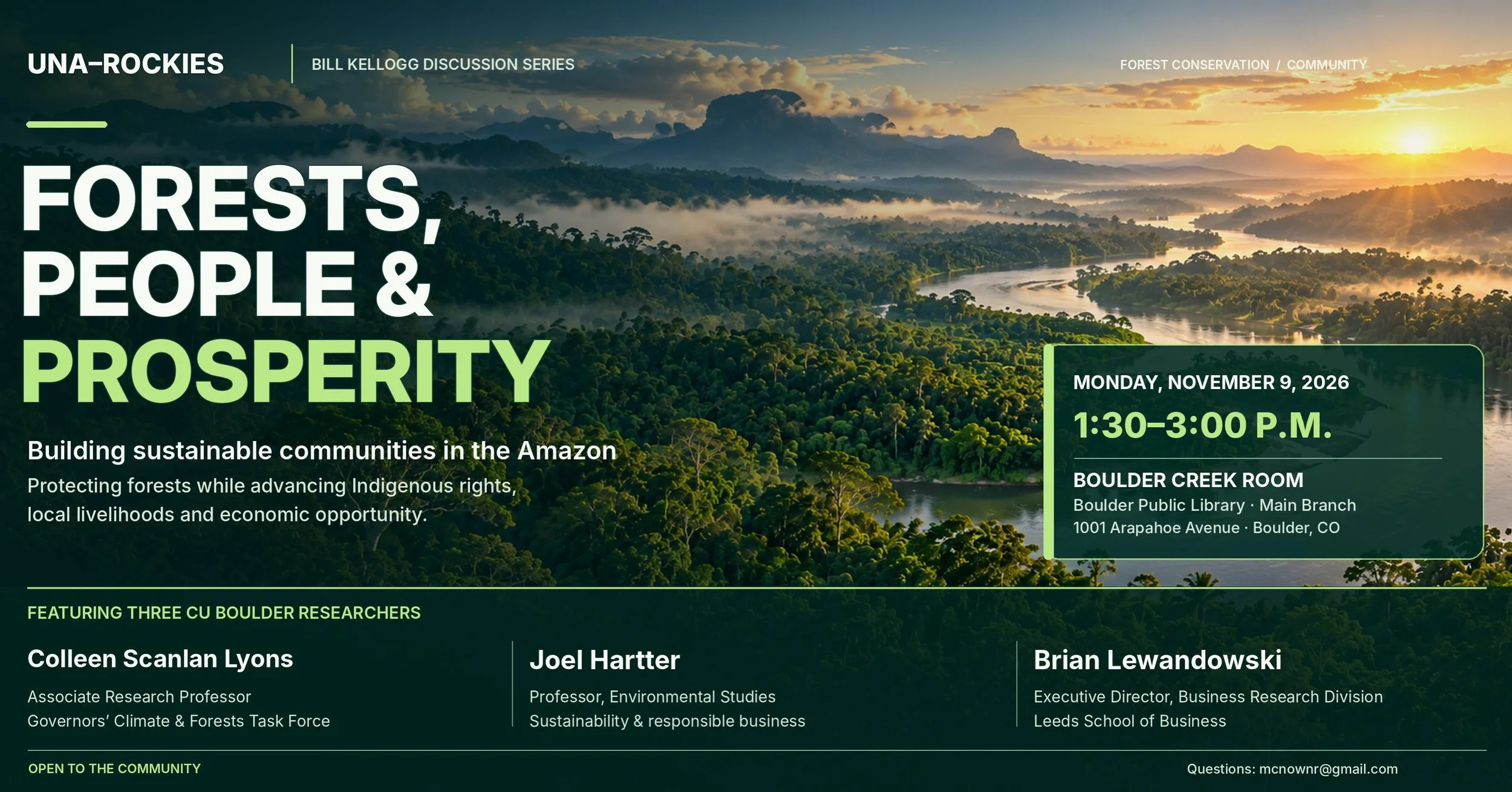
Our next meeting of the Bill Kellogg UNA-BC Discussion Series will be held on December 9th, 2026, 1:30-3:00 PM in the Boulder Creek Room of the Main Branch of the Boulder Public Library.
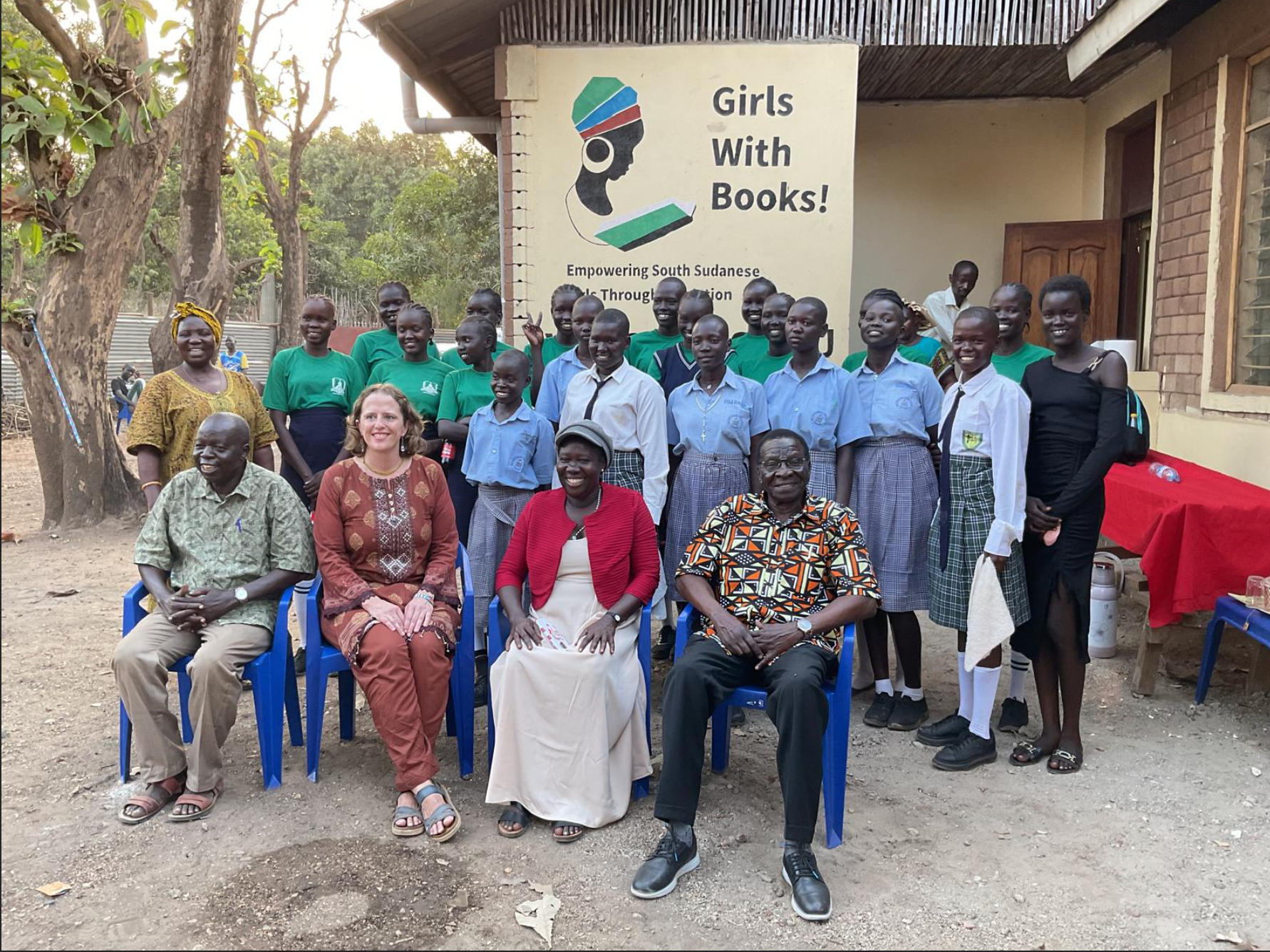
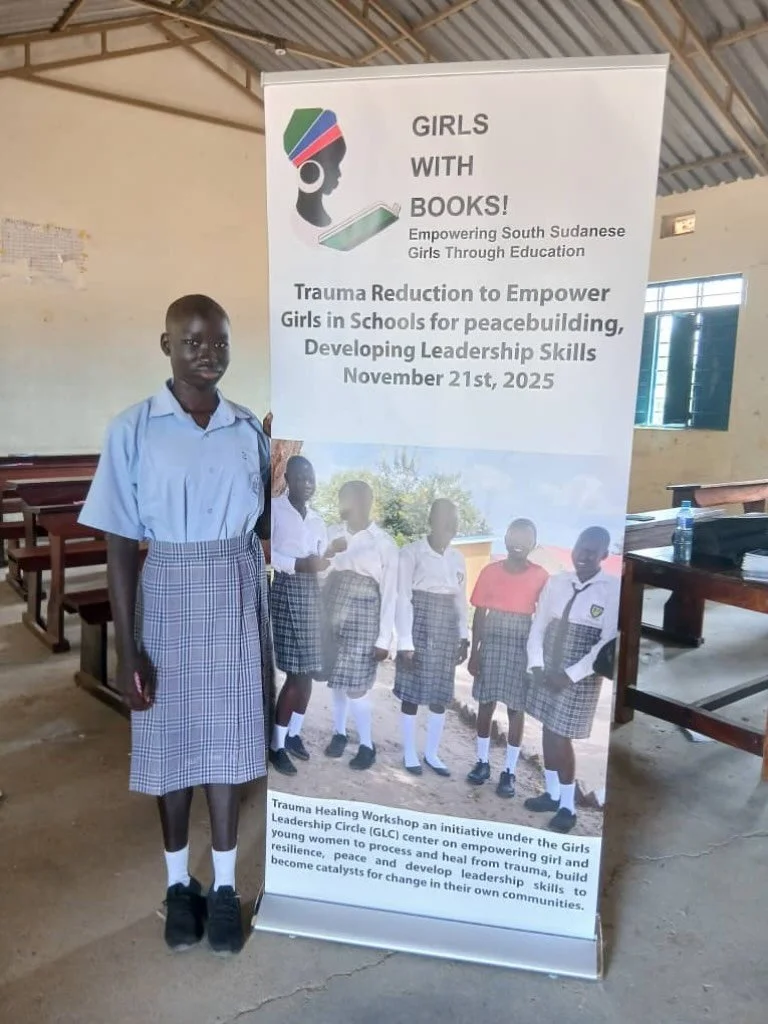
Girls With Books is helping South Sudanese girls access education, develop leadership skills, and become peacebuilders in their communities. When we think about education, we often picture classrooms, textbooks, and exams. But education is about much more than academics. It can create opportunities, build confidence, and give young people the tools to make a difference in their communities. As an advocacy intern with UNA Boulder, I've learned about organizations working to address global inequalities. One that particularly stood out to me is Girls With Books, a nonprofit dedicated to educating South Sudanese girls to become leaders and peacebuilders. After reading its 2026 Mid-Year Report, I wanted to highlight some of theorganization's recent accomplishments and reflect on why this work matters.
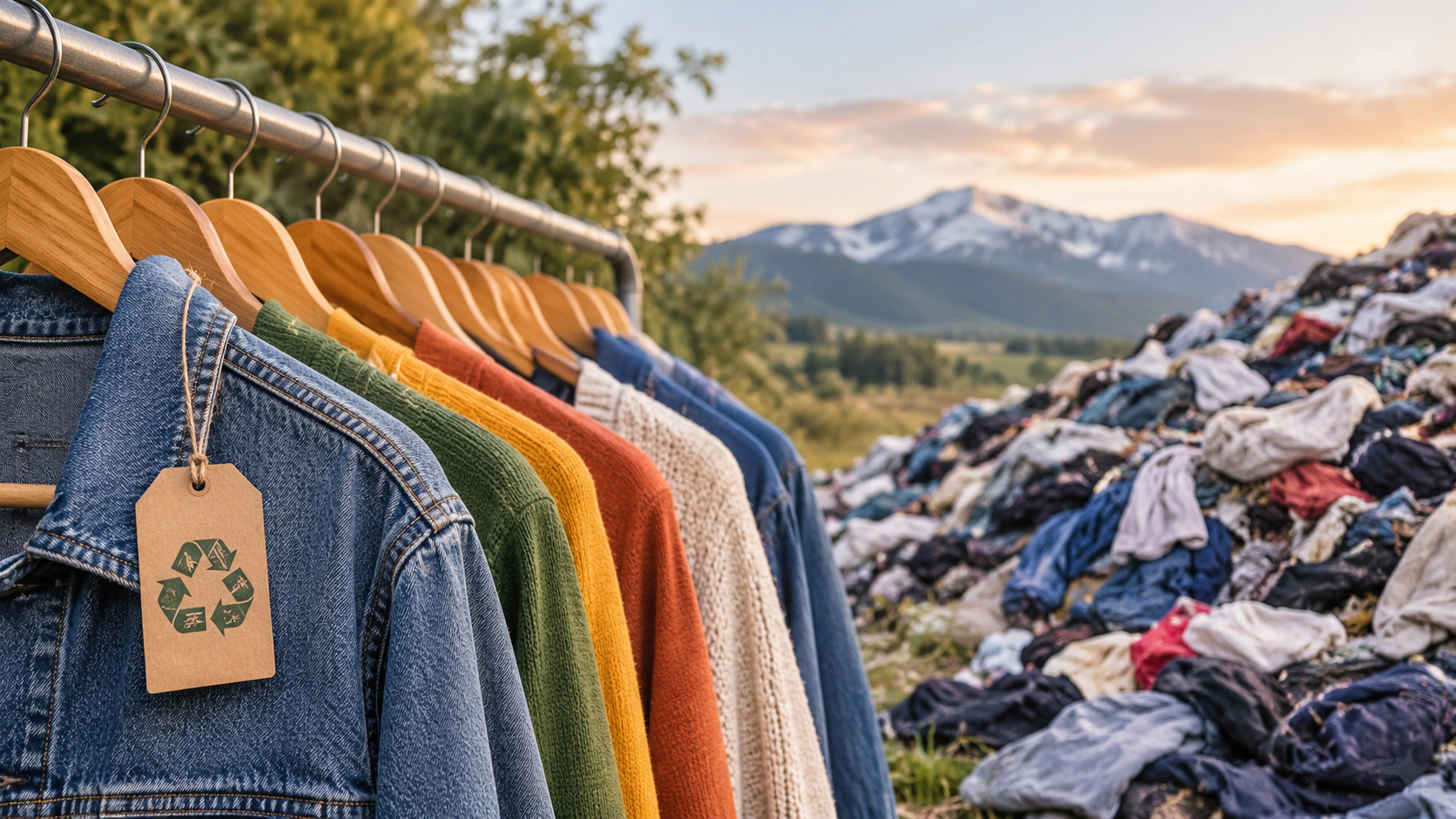
Fast fashion makes it easy and affordable to keep up with trends, but inexpensive clothing can come with extreme environmental costs. Learn how the fashion industry contributes to global waste and how more sustainable clothing choices can help drive change among younger generations.
Human trafficking is a serious issue in Colorado that affects both adults and children. According to the National Human Trafficking Hotline, 192 cases involving 246 victims were identified in Colorado in 2025. The Common Sense Institute also reported that preliminary Colorado Bureau of Investigation data recorded 110 human trafficking offenses in 2025. Of those, 87 involved sex trafficking and 23 involved involuntary labor. The report also identified 48 victims under the age of 18. These numbers show that human trafficking is not just something happening in other countries, but it is also happening in our communities here in Colorado. It is important to remember that these numbers only include cases that were reported or identified, so the actual number of victims could be higher.
By Sierra Bulk, this post examines India’s emergence as a global power under Prime Minister Modi, covering its rapid economic growth, shifting foreign relations, and the BJP’s Hindu nationalist agenda that has targeted the Muslim minority. It then turns to the persistent human rights crisis of caste discrimination against Dalits, which continues despite legal bans and international attention.
Daryl (President of UNA Rockies) walks through the history of the UN from its inception in 1945 through its eight phases of evolution (decolonisation, peacekeeping, the shift to sustainable development, etc.). He looks at the tangible impact of the UN and the journey from the Millennium Goals to the SDGs, highlighting what has worked and where we are still falling short. He then maps the historic phases of the UN to the six pillars of the UNA’s work. He brings it to a month-by-month account of what the chapter has done over the last year and what’s in store for the future (discussion series, the Human Rights Award, the school-wide MUN rollout, etc.). He finishes by mentioning the roughly 30 volunteers in the chapter and inviting people to get involved.
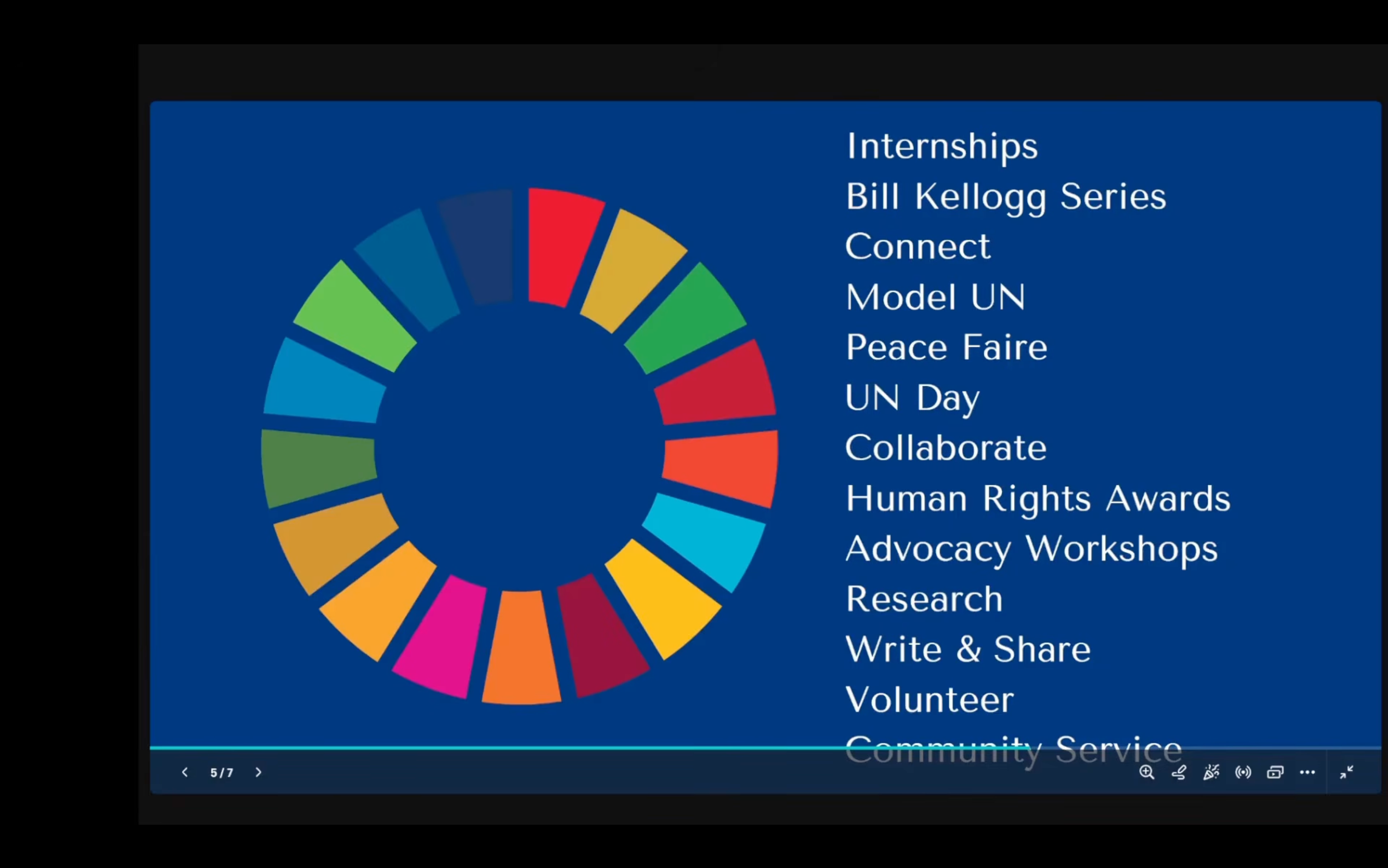
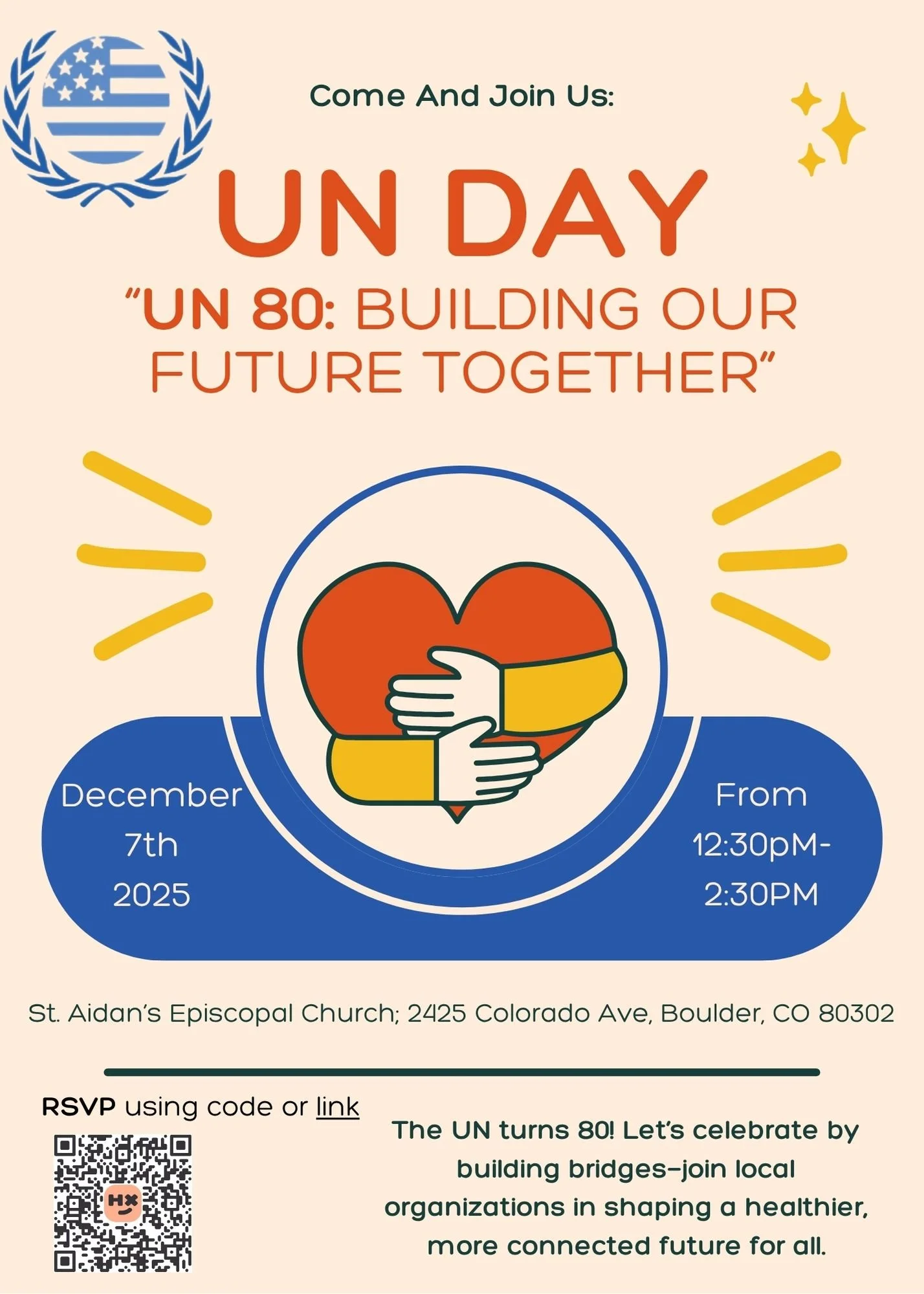
Jill Wilson touches on her experience in finding community at UNA Rockies. She begins by discussing the 17 SDGs and actually doing the work on the ground…and in the water. She then goes through the various ways you can get involved with UNA Rockies (internships, Model UN, the Peace Faire, UN Day, the Human Rights Awards, advocacy workshops, and volunteering) and find your community. She finishes on the theme of 'Think Global. Belong Local”.
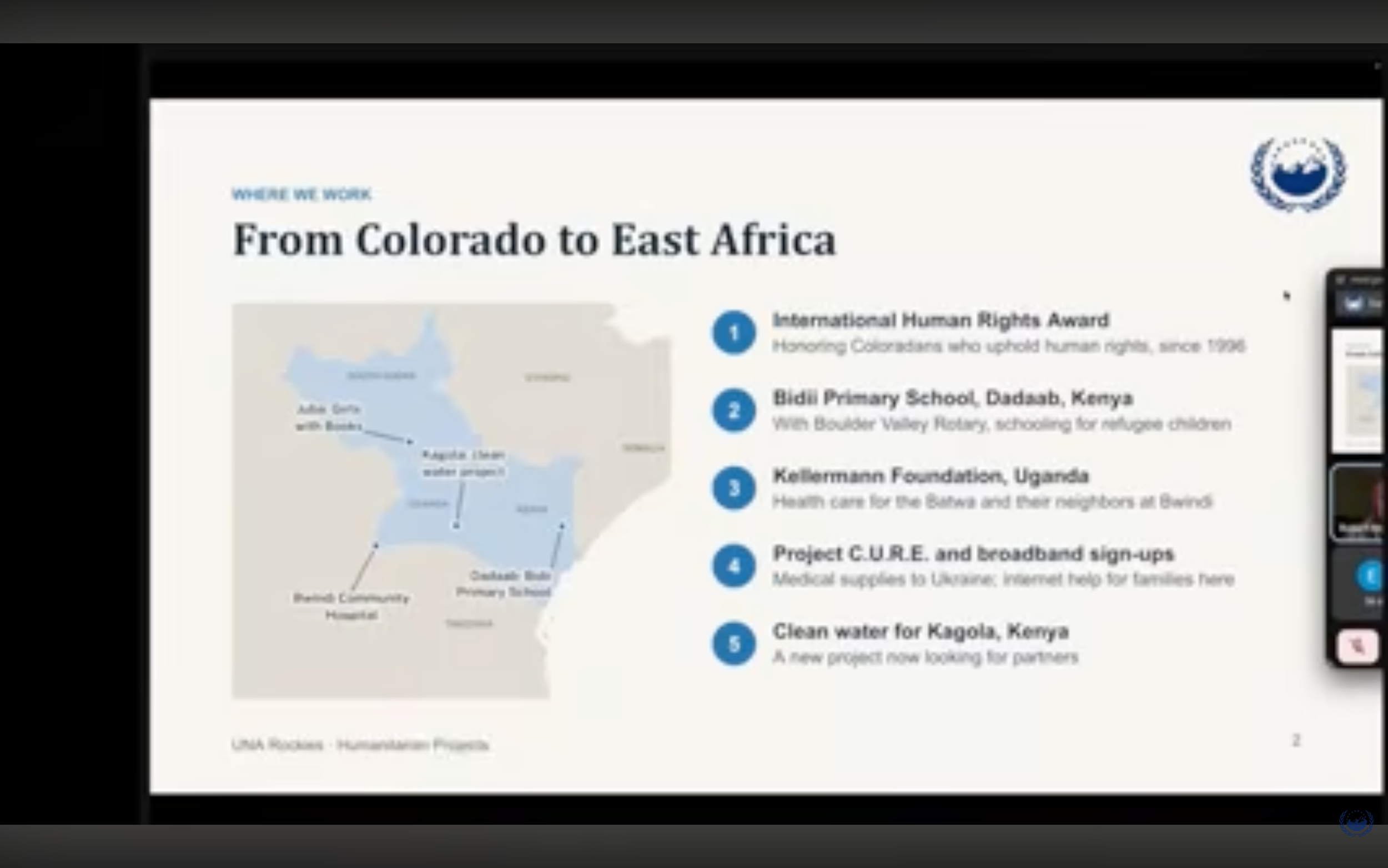
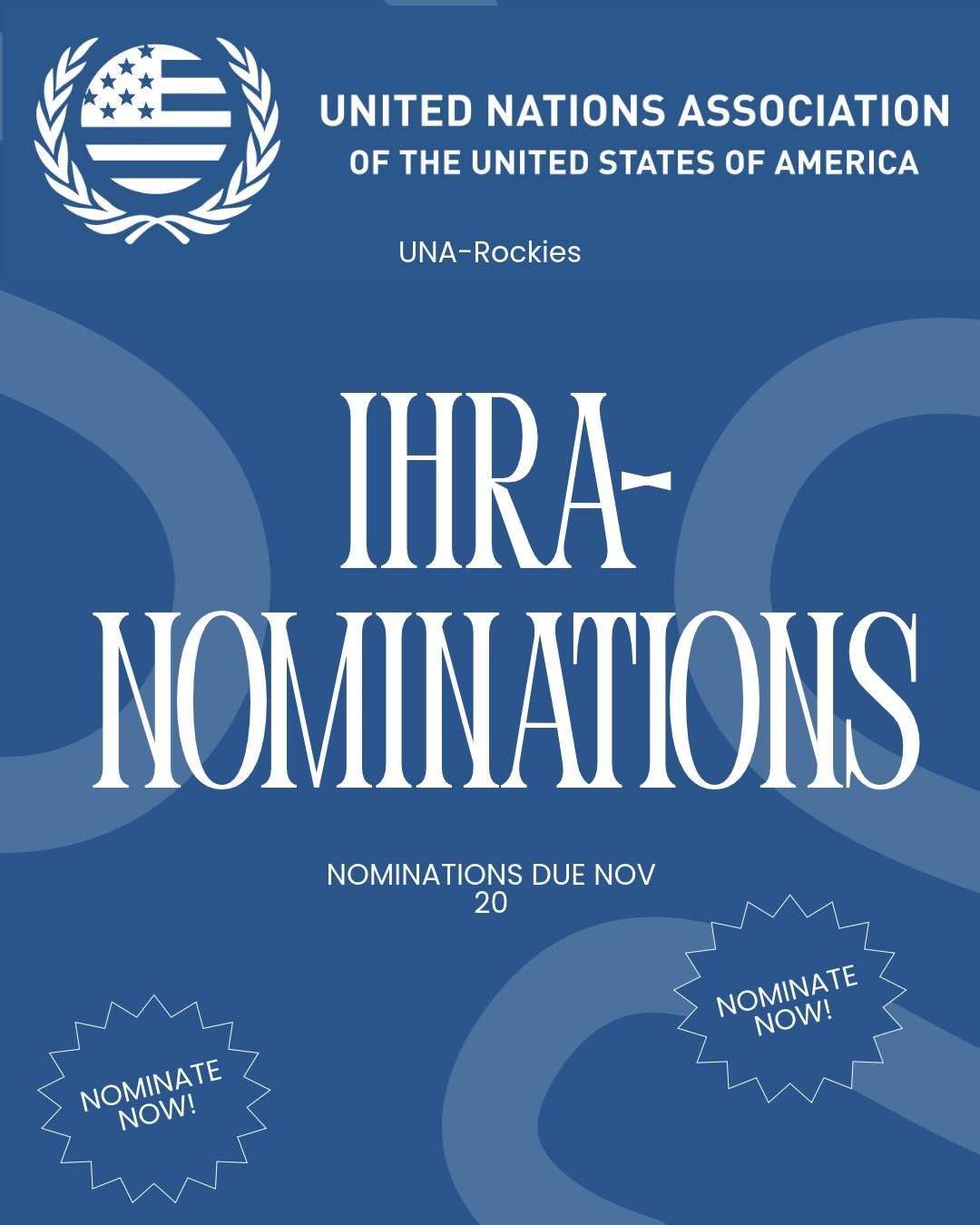
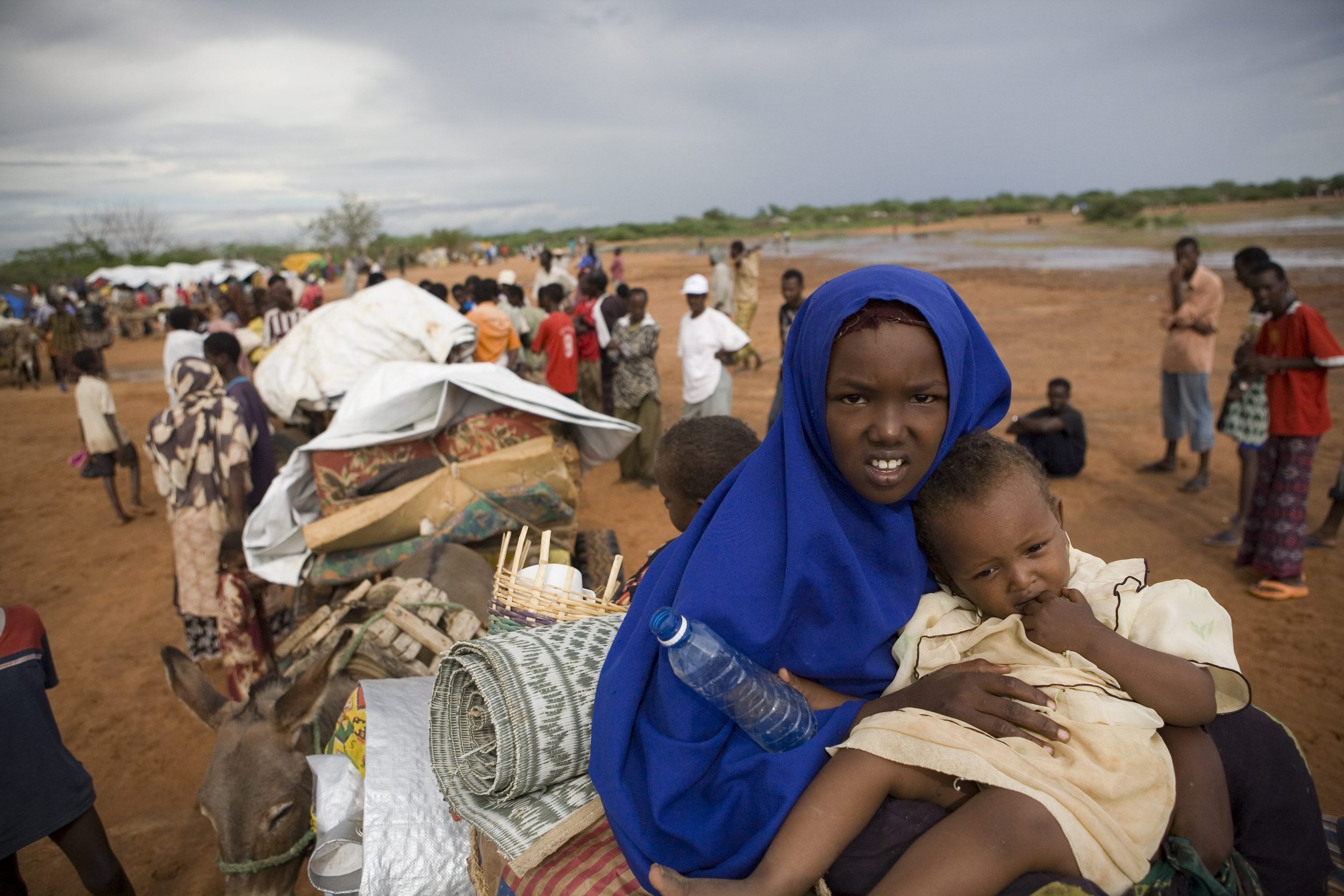
Robert covers the charity and humanitarian work of the chapter. The International Human Rights Award (which has been running since 1986, with the 2026 nominations closing 20th November) is one of the major initiatives. There's also ongoing work to fundraise for Bidii Primary School in the Dadaab refugee camp in Kenya. He's involved with the Kellermann Foundation’s work with the Batwa people and Bwindi Community Hospital in Uganda. Project C.U.R.E. medical supply donations are another area of activity, as are the broadband sign-up events we've had for refugee and Latino families in the area of Denver. There is a clean water project in Kagola, Kenya, which is still looking for partners. The final appeal is to the audience to nominate, volunteer, or donate.
Ashley shares findings from her Georgetown University research exploring how children ages 7–14 imagine helping their communities during disasters, and how adults shape their opportunities to contribute. Through conversations, visual prompts, and drawings, children imagined caring for neighbors, designing emergency shelters and medical facilities, and supporting families through recovery. Yet children also acknowledged that they sometimes hesitate to share their ideas. Building on these findings, Ashley explores how children's perspectives might inform Boulder County's ongoing Hazard Mitigation Plan update, with a potential second phase focused on co-designing a preparedness activity. Her work draws on Article 12 of the UN Convention on the Rights of the Child, the Sendai Framework, and SDG 16.7, inviting us to reconsider whose voices help shape community resilience.
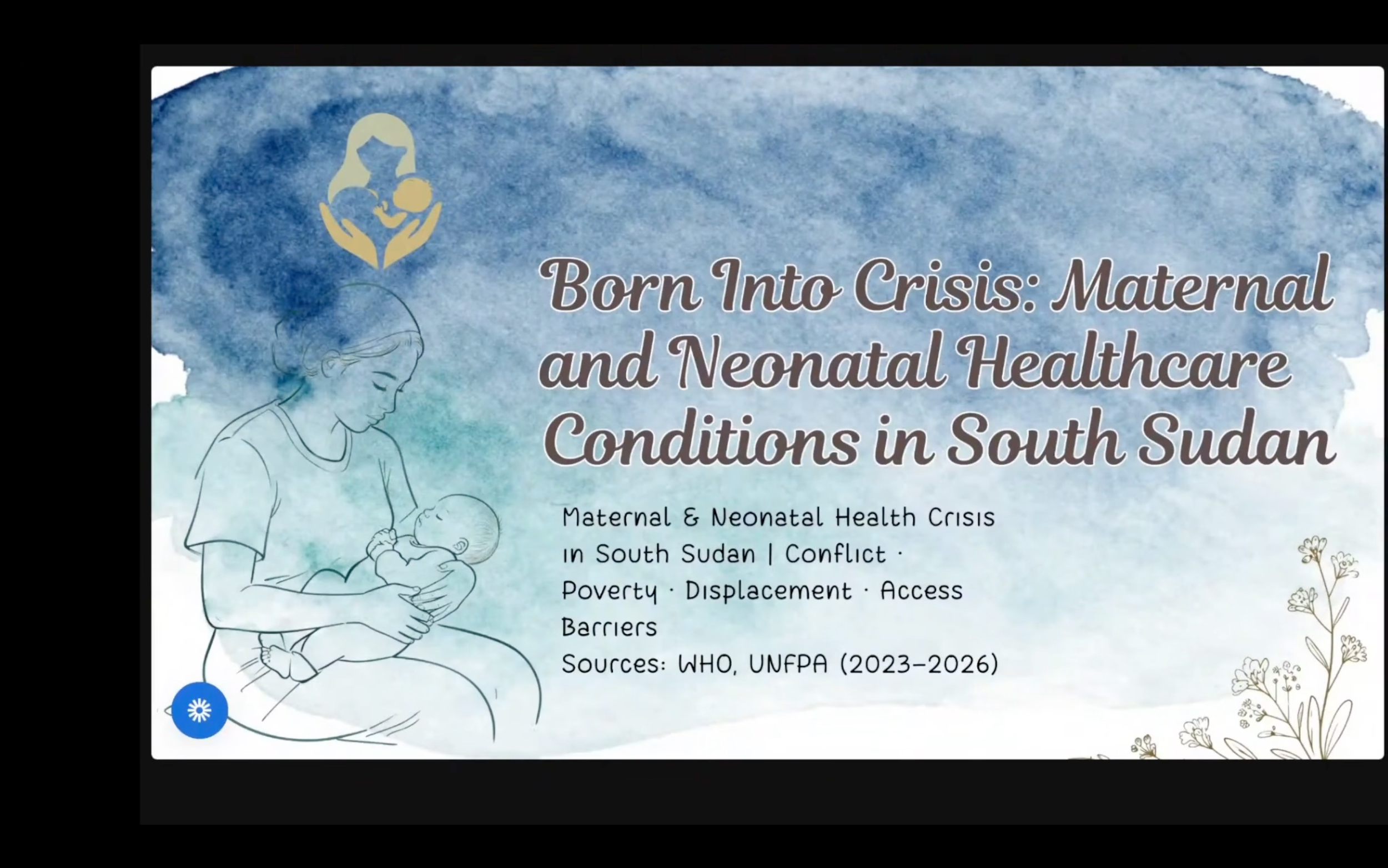
Maile’s advocacy project and lightning talk touched on the state of maternal and newborn health in South Sudan, using WHO and UNFPA data. Her slides show a maternal mortality ratio of around 692 per 100,000 live births and about 60% of births occurring without the attendance of a skilled person. She outlines the main risks to mothers and to the newborn and the gaps in both antenatal and postnatal care. She goes on to describe how the conflict, displacement, looting of health facilities, the destruction of roads, and food insecurity all have the effect of cutting people off from care, with a particular focus on Jonglei State in 2026.
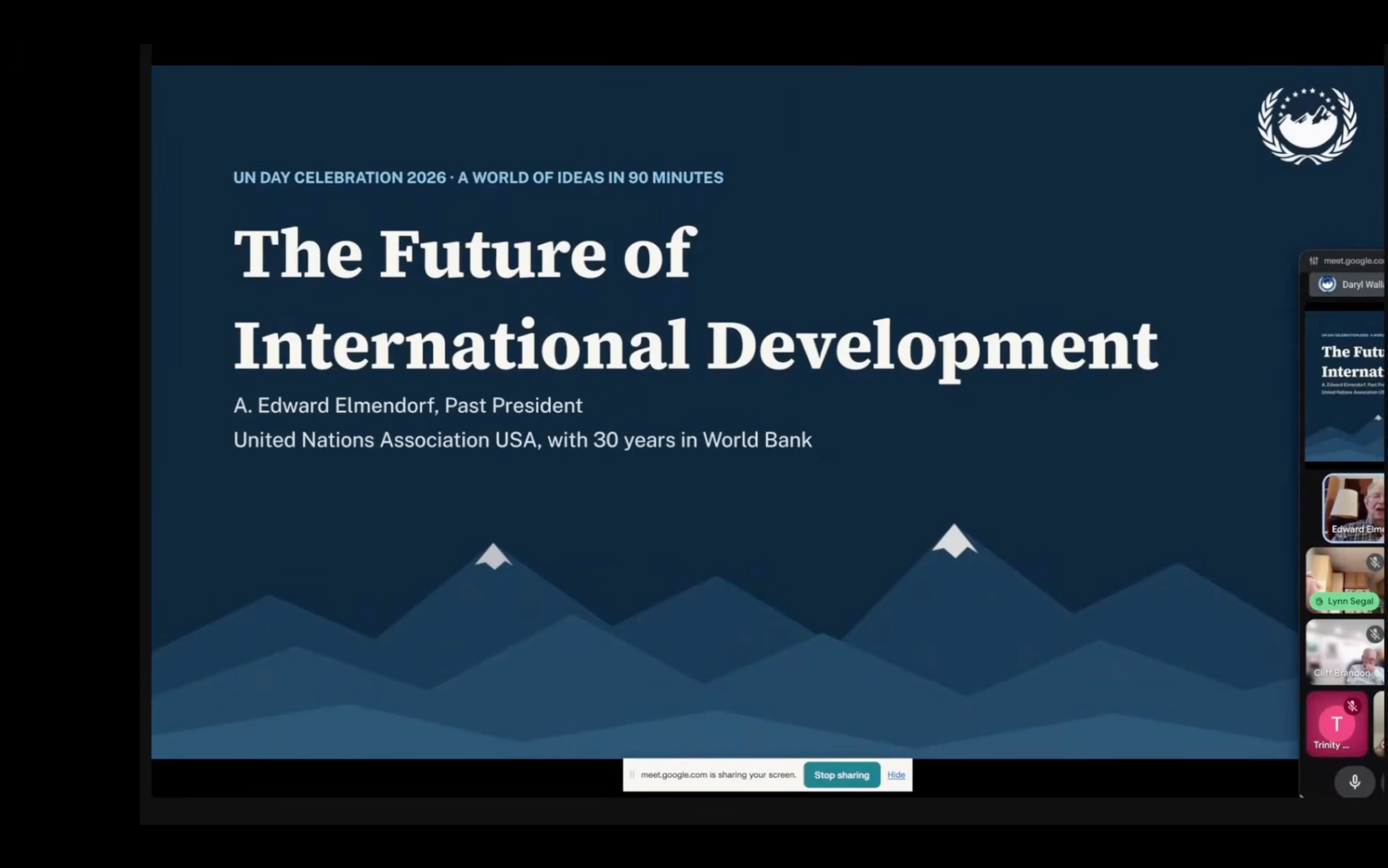
Edward's talk is structured in three parts: looking back, the state of play today, and looking forward. The history is traced from the Marshall Plan and the OECD’s Development Assistance Committee through to the move from the MDGs to the SDGs. The current situation is that we're ten years in and about two-thirds of the SDG targets are still way behind. There's a funding gap of over $4 trillion a year and less than five years to 2030. He positions the present as a choice between “chaos and decline or renewal" with reference to a US retreat and the potential for new ways of working.
Secondhand shopping is becoming a popular alternative to buying brand new clothing, especially among younger generations. While fast fashion makes it easy to keep up with trends, there are other ways to shop without constantly contributing to clothing production and waste. Through my interviews with Plato's Closet and Apocalypse in Boulder, Colorado, I wanted to learn more about how secondhand stores work and why people are choosing to shop this way.