
The True Cost of Fast Fashion: What Happens After We Stop Wearing Our Clothes
Fast fashion makes it easy and affordable to keep up with trends, but inexpensive clothing can come with extreme environmental costs. Learn how the fashion industry contributes to global waste and how more sustainable clothing choices can help drive change among younger generations.
When a new trend appears online, stores release another collection, and then suddenly the clothes we bought a few months ago are no longer in style. For many college students, social media makes it easy to discover new trends and feel pressure to keep up. But while fast fashion makes it possible to follow trends without spending much money, its environmental impacts are often overlooked.
Fast fashion is focused on producing large amounts of inexpensive clothing quickly to keep up with consumer trends. Instead of emphasizing clothing made to last, many companies encourage customers to buy new items frequently. This creates a cycle of buying, wearing, and eventually throwing away clothing at an extreme rate, especially because social media makes trends so visible to college students and younger generations.
The Environmental Impact:
Producing clothing requires many natural resources, energy, and large amounts of water, from growing materials to manufacturing, dyeing, and transporting garments. Each stage can contribute to environmental pollution and greenhouse gas emissions.
According to the United Nations Environment Program (UNEP), the world produces about 92 million tonnes of textile waste each year. Much of this waste ends up in landfills or is burned, creating additional environmental problems.
This issue doesn't end when clothing is thrown away. The Ellen MacArthur Foundation explains that today's fashion industry largely follows a linear system: resources are used to make clothing, consumers purchase and wear it, and eventually it is discarded into landfills or shipped overseas to second-hand markets. This system depends on constantly producing new products rather than making the most of the clothing and materials available.
Rethinking the Way We Consume Clothing:
The Ellen MacArthur Foundation promotes a circular economy in which clothing is designed to last longer and kept in use through repair, resale, reuse, and recycling.
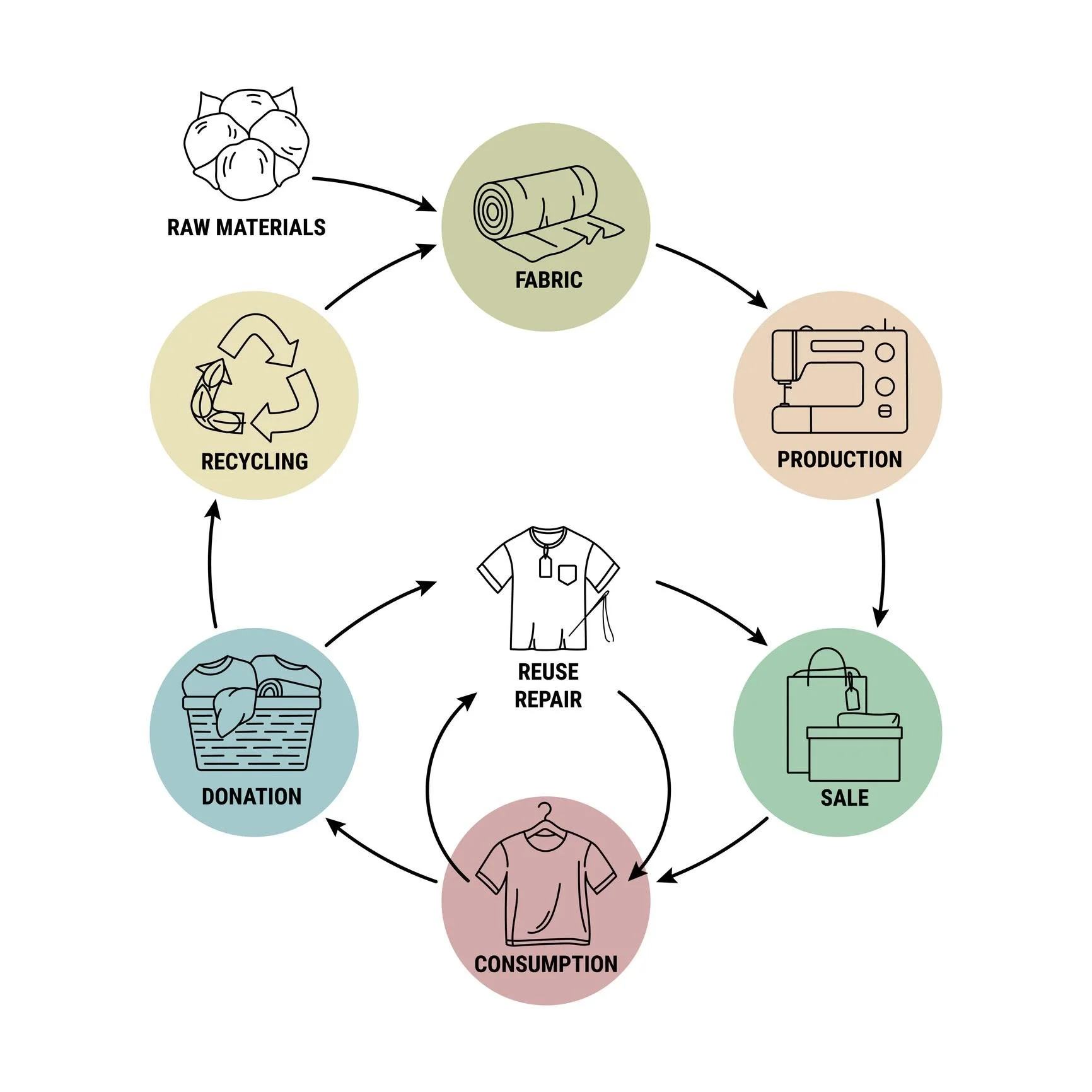
Rather than treating clothing as disposable, this circular system can encourage people and businesses to recognize its value just beyond the first purchase. For example, a T-shirt that is no longer with its first owner can be resold or passed down to someone else who needs it instead of being thrown away.
This approach also connects to the United Nations Sustainable Development Goals (SDGs), particularly Goal 12: Efficient Consumption and Production, which encourages cutting waste and using resources more sustainably. It also supports Goal 13: Climate Action, which focuses on addressing climate change and its impacts.
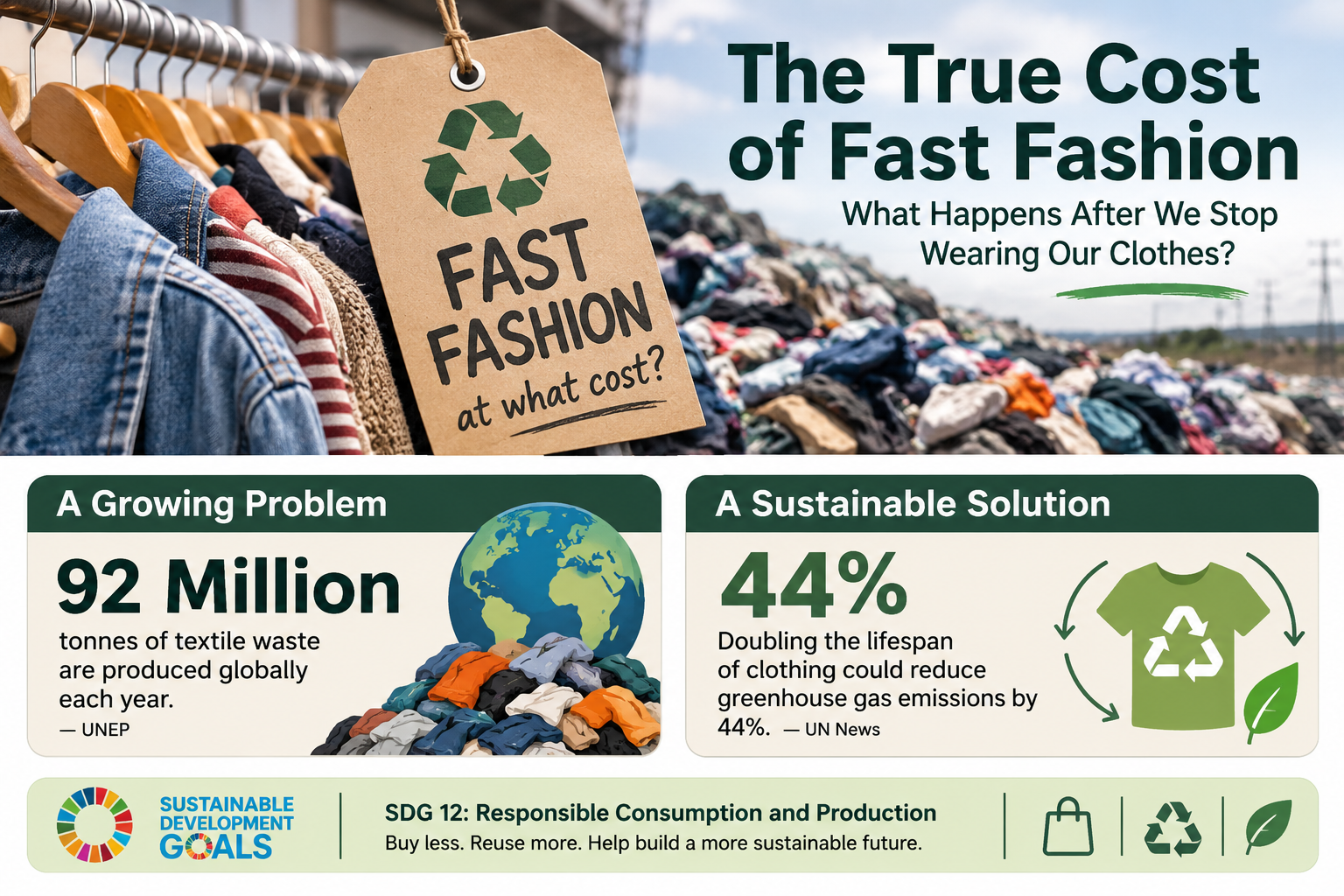
UN News- Clothing Lifespan Statistic
What does this mean for Colorado?
Although fast fashion is a global issue, solutions can start within local communities. In Boulder, secondhand stores, vintage shops, and clothing exchanges offer different alternatives to constantly purchasing new clothing.
For this project, I am exploring how local businesses in Boulder, Colorado, approach clothing reuse and sustainable shopping. Through conversations with stores like Plato’s Closet and Apocalypse, I hope to teach people and better understand why they choose secondhand clothing and how resale businesses help keep clothing out of landfills.
Moving Toward More Sustainable Fashion:
Changing the fashion industry requires action from businesses, governments, and consumers. People can start by buying less, shopping at secondhand stores, and keeping clothing in use longer. Small changes in how we consume clothing can help build a more sustainable future.
Take Action: Beyond the Label:
LEARN: Explore the Ellen MacArthur Foundation’s work on circular fashion to learn how the fashion industry can reduce waste.
ATTEND: Participate in a local clothing swap or sustainable fashion event.
VOLUNTEER: Connect with an environmental organization working on waste reduction and sustainable consumption to learn about volunteer opportunities
CONNECT: Start Conversations with local shops and community leaders about reducing clothing waste.
Bibliography:
"Environmental Costs of Fast Fashion." United Nations Environment Programme, www.unep.org/en/news-and-stories/story/environmental-costs-fast-fashion.
"Fast fashion: UN warns of environmental and social costs." United Nations, 13 Mar. 2025, news.un.org/en/story/2025/03/1161636.
"Fashion and the Circular Economy: Deep Dive." Ellen MacArthur Foundation, www.ellenmacarthurfoundation.org/fashion-and-the-circular-economy-deep-dive.
"Unsustainable Fashion and Textiles in Focus on International Day." United Nations Environment Programme, www.unep.org/en/news-and-stories/press-release/unsustainable-fashion-and-textiles-focus-international-day-zero.
