
Beyond Fast Fashion: Giving Clothing a Second Life
Secondhand shopping is becoming a popular alternative to buying brand new clothing, especially among younger generations. While fast fashion makes it easy to keep up with trends, there are other ways to shop without constantly contributing to clothing production and waste. Through my interviews with Plato's Closet and Apocalypse in Boulder, Colorado, I wanted to learn more about how secondhand stores work and why people are choosing to shop this way.
When we think about shopping, it's easy to get caught up in buying whatever is trending. Social media constantly introduces new styles, and stores are always putting out new collections. But what happens to all the clothing people stop wearing? A lot of it still has plenty of wear left in it, which is where secondhand stores come in.
The Value of Resale
One of the biggest things I learned from my interview with Plato's Closet was just how much clothing people bring in that is still in great condition. An employee explained that many college students bring in items that are brand new with tags or have barely been worn. Instead of sitting in someone's closet unused, these clothes can be purchased by someone else and get another chance to be worn. (Plato’s Closet employee, personal interview)
Plato's Closet's business model allows customers to buy and sell gently used clothing. Affordability is also a big reason people shop there. The employee mentioned that college students often come in looking for outfits for events like rush and Halloween, when they might not want to spend a lot of money on something they will only wear a few times.
Something else I found interesting was the idea that secondhand shopping gives people more individuality. With brands like Shein, Zara, and H&M constantly producing similar styles and following the same trends, shopping secondhand can help people find pieces that feel a little more unique.
Different Approaches to Secondhand Fashion
I also spoke with Apocalypse, a local vintage and secondhand store in Boulder, to learn more about how its approach compares to Plato's Closet.
One thing that stood out to me during this interview was how Apocalypse gets its clothing. The employee explained that the store buys clothing directly from people, making them an important part of its inventory. Rather than depending on newly manufactured products, the store gives previously owned clothing another opportunity to be sold and worn. (Apocalypse employee, personal interview)
Although Plato's Closet and Apocalypse operate differently, both show how clothing resale can offer an alternative to fast fashion retail. One is a national resale franchise, while the other offers a local vintage shopping experience. Both help keep clothing in circulation and give customers another option besides buying something brand new.
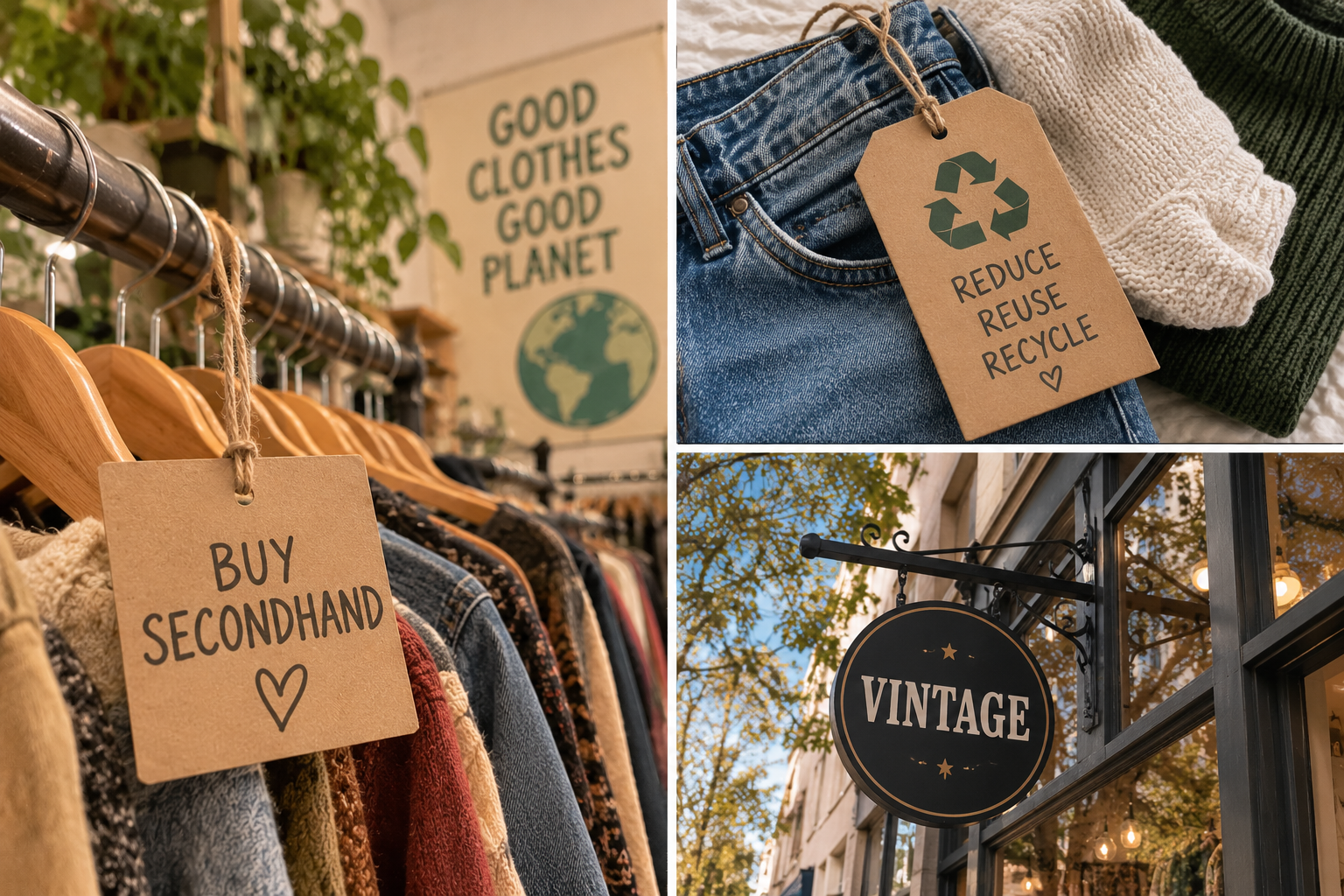
Rethinking the Way We Shop
After speaking with both businesses, I started thinking more about how much of our shopping habits are influenced by trends and convenience. It's easy to buy something new because it's inexpensive or because everyone online seems to have it. But sometimes we already have clothing sitting in our closets that someone else would love to wear.
Secondhand shopping isn't going to solve every environmental problem caused by the fashion industry, but it is one way to make better use of the clothing that already exists. Buying used, selling items we no longer wear, and being more thoughtful about our purchases can all help reduce unnecessary clothing waste. (Ellen MacArthur Foundation)
This also connects to the United Nations Sustainable Development Goal 12: Responsible Consumption and Production, which focuses on reducing waste and using resources more responsibly. (United Nations)
Take Action: Beyond the Label
For the next part of my advocacy project, I am organizing a community clothing swap on December 3rd, located outside the University Memorial Center. I wanted to take what I have learned from researching fast fashion and interviewing secondhand businesses and turn it into something people can actually participate in.
The idea is simple: bring clothing you no longer wear and allow it to find a new home with someone else. Instead of throwing clothes away or immediately buying something new, a clothing swap allows people to exchange items, find new pieces, and make use of clothing that might otherwise go unworn.
LEARN: Explore the Ellen MacArthur Foundation's work on circular fashion and how the fashion industry can reduce waste.
SHOP: Check out secondhand and vintage stores before buying something brand new.
ATTEND: Join the December 3rd clothing swap and give your unused clothing another life.
RETHINK: Before purchasing something new, take a look at what you already own or consider whether you can find it secondhand.
After talking with Plato's Closet and Apocalypse, I've realized that making fashion more sustainable doesn't always have to involve huge changes. Sometimes it starts with something as simple as choosing to shop secondhand or passing along clothing you no longer wear. Businesses can help make these options available, but consumers also have a role in changing the way the fashion industry works. Through my interviews and the upcoming clothing swap, I hope to show that shopping more sustainably can be accessible, affordable, and something more people can take part in.
Bibliography
"Environmental Costs of Fast Fashion." United Nations Environment Programme, https://www.unep.org/en/news-and-stories/story/environmental-costs-fast-fashion.
"Fashion and the Circular Economy: Deep Dive." Ellen MacArthur Foundation, https://www.ellenmacarthurfoundation.org/fashion-and-the-circular-economy-deep-dive.
"Goal 12: Responsible Consumption and Production." United Nations Sustainable Development, https://www.un.org/sustainabledevelopment/sustainable-consumption-production/.
Interview with Plato's Closet employee. Boulder, Colorado. November 2026.
Interview with Apocalypse employee. Boulder, Colorado. November 2026.
