
Vikram Gopalal - Denver: Continuing our look at the Colorado Startup Week panel on global development and technology, the conversation shifts from ground-level design to the macro-economic systems required to fund and sustain long-term change. Solving century-scale problems requires rethinking capital allocation, institutional governance, and multi-stakeholder partnerships.
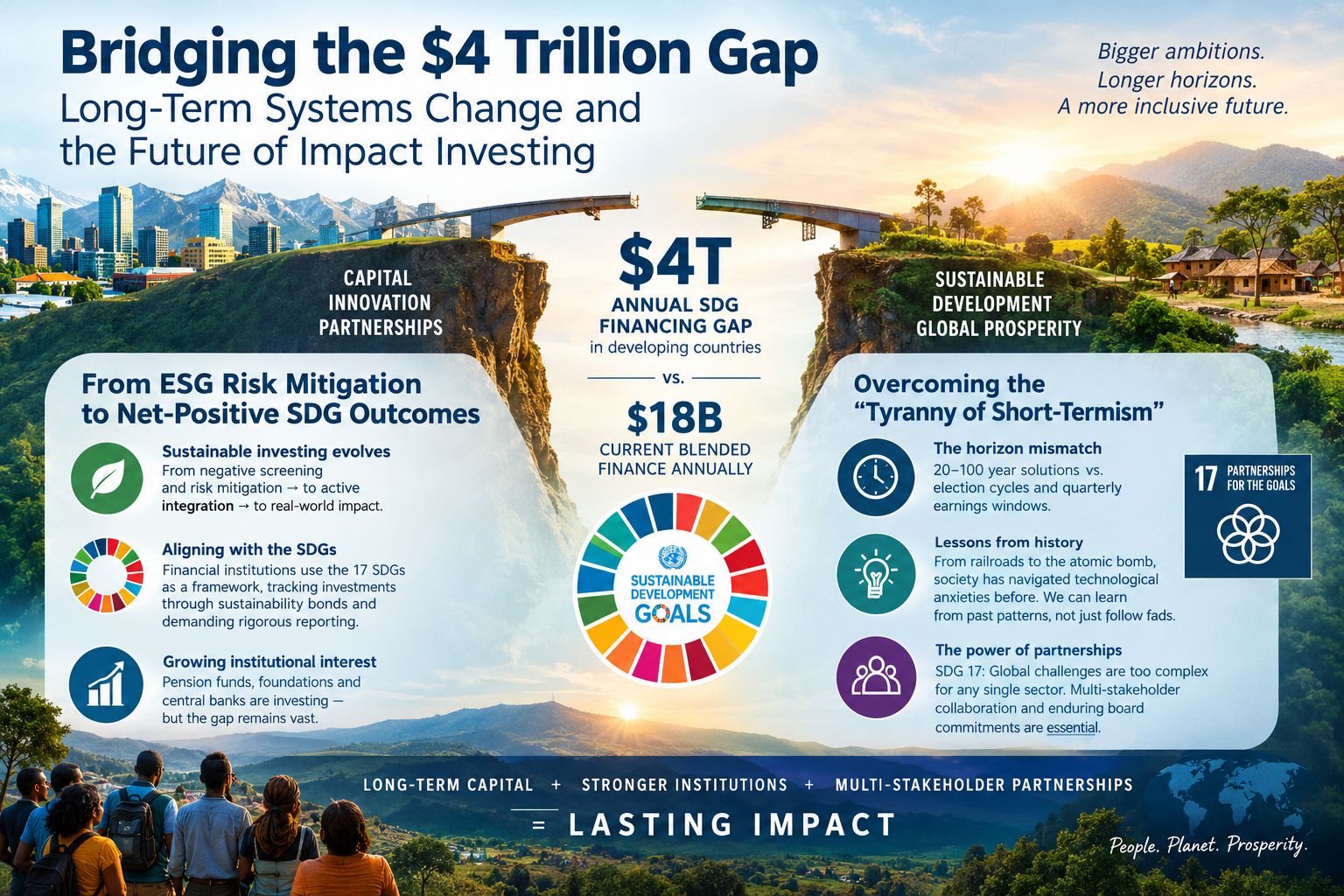
From ESG Risk Mitigation to Net-Positive SDG Outcomes
The evolution of sustainable investing: A leader in sustainable investing and development finance outlined how sustainable investing has evolved from early phases of negative screening and risk mitigation into active integration and, ultimately, a focus on real-world impact.
Aligning with the SDGs: Major financial institutions utilize the United Nations' 17 Sustainable Development Goals (SDGs) as a framework, tracking investments through sustainability bonds and demanding rigorous reporting on both primary outcomes and negative externalities.
The massive financing gap: Despite growing institutional interest from pension funds, foundations, and central banks, a significant shortfall remains—developing countries face an annual $4 trillion SDG financing gap, whereas blended finance currently accounts for only $18 billion annually.
Overcoming the "Tyranny of Short-Termism"
The horizon mismatch: The panel addressed the fundamental challenge of trying to solve 20-to-100-year problems (such as climate change and poverty) within short-term political election cycles and quarterly corporate earnings windows.
Lessons from technological history: Drawing on the history of technology—from railroads to the atomic bomb—Professor Lucena reminded audiences that society has repeatedly navigated profound technological anxieties by studying past patterns rather than succumbing to short-term fads.
The power of partnerships: Underpinning all long-term strategies is SDG 17, which highlights that global challenges are too complex for any single sector to solve alone, demanding ongoing multi-stakeholder collaboration and corporate board commitments that endure beyond individual executive tenures.
Previous Article; De-Risking Impact: Why ESG and SDG Investors Must Re-Evaluate Frontier Hard-Tech
By Vikram Gopapal
Published for Colorado Startup Week
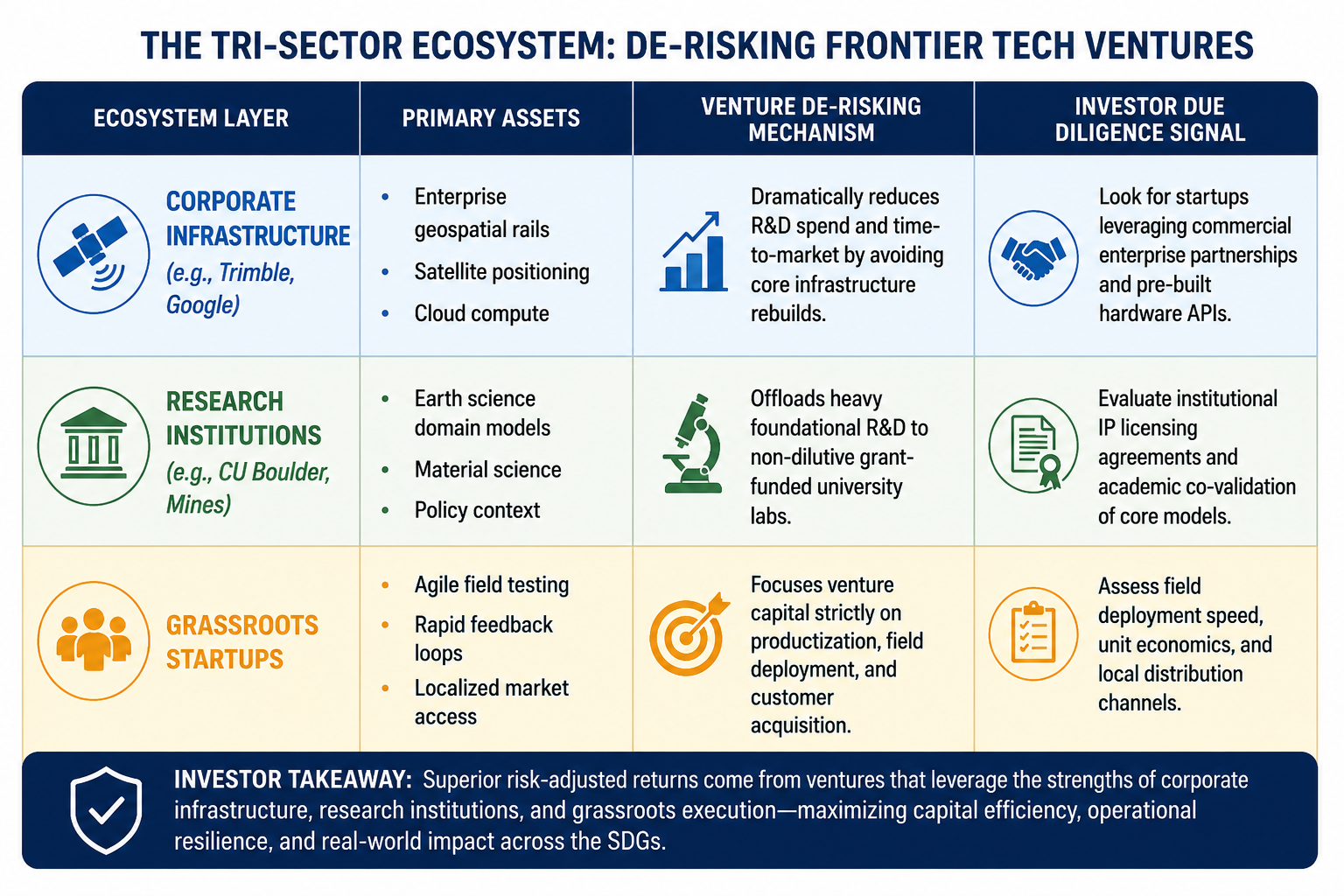
For early-stage venture investors and ESG/SDG fund managers, allocating capital toward technology for global development has historically presented a dilemma. On one hand, the thesis is compelling: the United Nations Sustainable Development Goals (SDGs) represent a multi-trillion-dollar market opportunity spanning Sustainable Cities (SDG 11), Climate Action (SDG 13), and Industry & Infrastructure (SDG 9). On the other hand, the risk profile of "frontier tech"—hardware, spatial AI, and remote infrastructure deployed in unstable or low-bandwidth environments—often triggers red flags in traditional due diligence. Read more…
